
Should we let children play with their food?
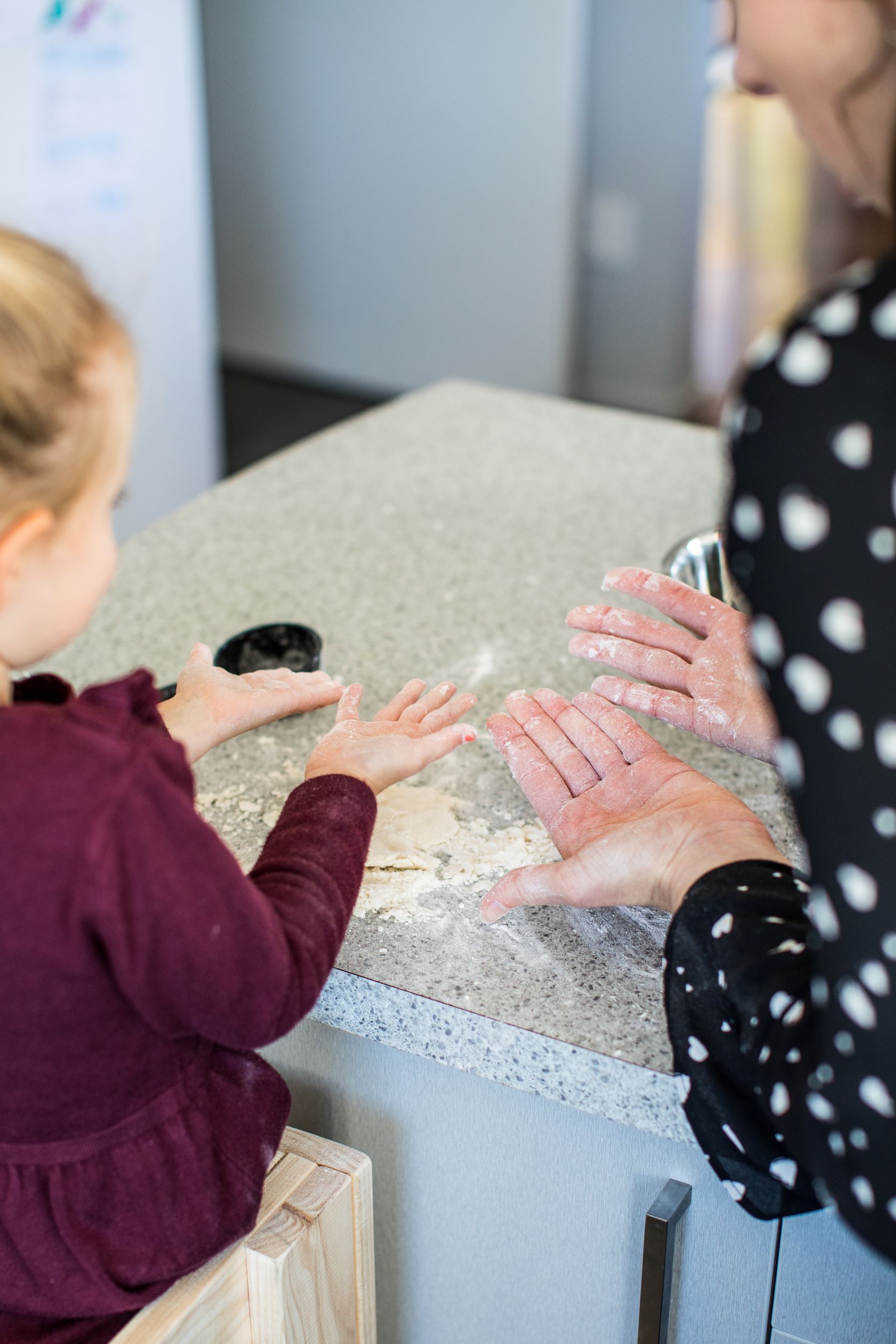
Children need to have time and opportunity to play with their food, in order to learn about and become comfortable with a range of foods. Playing with food allows for children to learn about the sensory properties of the food, prior to tasting them.
Play can be perceived as Tapu, therefore it is often advised that children shouldn’t play with their food and that food is only for eating. In this instance, play through cooking might be more appropriate.
Play is a valuable tool for learning about food before we get to tasting it. Food play allows children to find out what food feels like, what it smells like, and how it moves, in a ‘non-threatening’ form. Food play means that children can feel comfortable and in control of the food, before tasting. Children need to feel in control in order to eat, if they feel pressured in any way, they will likely not engage with food.
A recent study saw a 70% increase in fruit and vegetable consumption when the fruit and vegetables had a fun name. For example, broccoli that is called hulk trees increase the acceptance of foods. Broccoli play as trees encourages the child to engage with the food, rather than it being refused completely.
Food play is important and can be completed at the table during mealtimes, or during meal preparation and cooking.
Rebecca

0 Comments